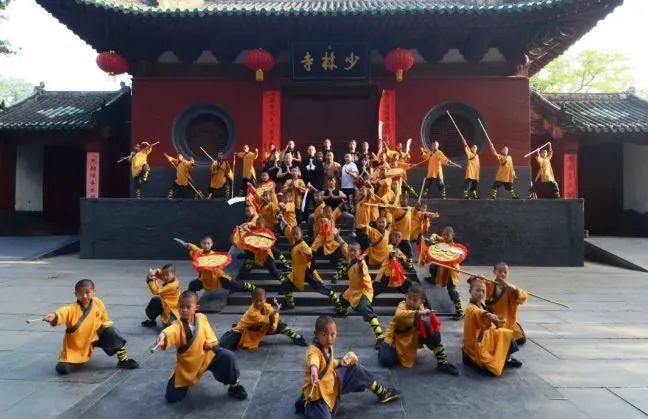
Shaolin Temple
Introduction
The Shaolin Temple, situated in Dengfeng county, Henan province, is renowned worldwide as the birthplace of Shaolin kung fu and a significant center of Chinese Buddhism. Founded during the Northern Wei Dynasty (AD 386-534), the temple has played a pivotal role in the development and dissemination of martial arts, as well as Buddhist teachings.
The Shaolin Temple is known for its vibrant cultural practices, including the annual Laba Festival, wherein monks distribute free porridge to the public. This tradition underscores the temple's commitment to charity and spiritual well-being. Additionally, martial arts performances and demonstrations held at the temple draw tourists eager to witness the prowess of Shaolin monks.
Historical Background
The establishment of the Shaolin Temple dates back to the Northern Wei Dynasty, under the patronage of Emperor Xiaowen. It was initially constructed to house the Indian monk Batuo, who traveled to China to spread the teachings of Buddhism. Over the centuries, the temple gained prominence not only as a religious center but also as a cradle for martial arts, particularly Shaolin kung fu, which integrates Zen Buddhism and martial prowess.
Nestled amidst the Songshan Mountains, the Shaolin Temple is surrounded by a picturesque natural landscape. Noteworthy architectural features include the Thousand Buddhas Hall, the Pagoda Forest and several other ancient structures that reflect the essence of Chinese Buddhist architecture. The temple complex is home to a 1,500-year-old ginkgo tree, adding to its historical and environmental significance.
Cultural Significance
Shaolin kung fu is arguably the most famous element associated with the temple. Over 1,500 years, it evolved into more than 700 forms, blending martial arts with Zen Buddhist philosophy. The practice of Shaolin kung fu emphasizes the unity of mind, body and breath, aligning with the spiritual goals of Buddhism. This martial art form has attracted practitioners and enthusiasts from around the world, contributing to its international acclaim.
The impact of Shaolin Temple extends beyond China, as it has become a global symbol of martial arts excellence. The temple attracts martial artists, scholars and tourists from all continents, seeking to experience its rich cultural heritage. Numerous Shaolin cultural centers have been established worldwide, facilitating the spread of its teachings and practices.
Modern Developments
In contemporary times, the temple has embraced technological advancements to promote its cultural heritage. Programs and performances utilizing XR technologies showcase the dynamic fusion of traditional martial arts with modern interactive experiences. Moreover, the Shaolin Temple has been featured in various films and documentaries, further enhancing its global profile.
The temple has been home to numerous monks and martial artists who have contributed significantly to the legacy of Shaolin kung fu. It also serves as an educational hub, offering training programs that attract both domestic and international students. These initiatives focus on martial arts, meditation and the philosophical tenets of Buddhism, allowing participants to immerse themselves in its spiritual and physical disciplines.
Preservation Efforts
Despite its fame, the Shaolin Temple faces challenges related to preservation and modernization. Efforts are ongoing to maintain its historical integrity while adapting to contemporary demands. Conservation projects aim to protect its ancient structures, ensuring the temple remains a vital part of China's cultural heritage.
The Shaolin Temple stands as a testament to the enduring legacy of Chinese martial arts and Buddhism. Its rich history, cultural significance and global influence continue to captivate people worldwide. As it navigates the challenges of the modern era, the temple remains a beacon of spiritual and martial enlightenment, inspiring generations to come.








